
Weight Regain After Wegovy
Weight Regain After Wegovy. For many people, the first 12 to 18 months on Wegovy deliver something that previously felt out of reach. Weight comes down, appetite feels manageable, the food noise (that you didn’t even know existed) disappears for the first time in years and eating no longer feels like a constant internal battle. Often, the only slightly unnerving part is the possibility of regaining the weight after coming off the medication.
By this stage, you may be at, or close to, your target weight. It can feel like the job is done. It isn’t. What you’re entering now is a completely different phase. This isn’t about losing weight with Wegovy; it’s about keeping it off afterwards. And this is where the real challenge begins.

What Happens After You Stop Wegovy?
One of the most overlooked aspects of Wegovy and all GLP-1s is what happens after you stop taking them. The drug remains active in the body for a period of time after discontinuation; in some cases, this can be as long as six weeks, which can create a false sense of security. Appetite may still feel controlled initially, leading some people to believe the changes are permanent.
In reality, as the medication fully clears the system, hunger signals will return, sometimes quicker than you might expect. You’ve put in the time, often over a year. You’ve invested financially. You’ve seen the results and felt back in control. That’s why this phase matters. No one wants to lose that. That’s why this next phase matters. It’s not about going backwards; it’s about holding on to what you’ve already achieved.
Why Weight Regain Happens After Wegovy
This is where many people struggle. Not because the medication fails, but because changes in the behavioural side are often missing. While Wegovy reduces appetite and mutes food-related thoughts, it doesn’t automatically rebuild the habits that led to weight gain in the first place. Eating patterns, emotional triggers and automatic responses to food are still there, just temporarily kept in the background.
Weight gain after stopping Wegovy.
Ideally, the time spent on the medication should be used to build new habits. Without a deliberate shift in eating patterns, mindset and daily routines during that period, maintaining weight loss becomes difficult once the medication is stopped. The same advice holds for those coming off Mounjaro.
Wegovy Provides a Temporary Solution
GLP-1 medications, such as Wegovy, were never designed to permanently replace behaviour: they control and manage appetite while you’re taking them, much like blood pressure tablets manage blood pressure. These medications work effectively during use, but when they are withdrawn, the underlying biology inevitably returns. Read about coming off Ozempic in another of our posts.
As Wegovy leaves your system, hunger increases, food becomes more rewarding again and decision-making around eating requires more effort. If new habits haven’t been established during the time on Wegovy, people often find themselves slipping back into familiar routines without fully realising it. And it’s not simply a lack of willpower; it’s a predictable behavioural rebound.
How to Maintain Weight Loss after GLP-1 Treatment
Used well, Wegovy can be a powerful tool: thanks to reduced hunger and quieter food thoughts while on the medication, the effort required to make better decisions is lower. It creates a window of opportunity for you to improve food choices and establish consistent habits around eating, such as regular meal structure and portion awareness.
The time you spend on Wegovy creates space for you to start recognising the difference between physical hunger and emotional or situational triggers. It’s an ideal opportunity to address some of the cognitive patterns that often drive overeating. These include all-or-nothing thinking, using food as a reward or relief, and automatic responses to stress, boredom or environment. With appetite reduced, these patterns become easier to notice and interrupt.
Weight Regain after Wegovy
Over time, repeated behaviours begin to form more automatic habits. Small, repeatable actions carried out during this phase on the medication can become the foundation for long-term weight maintenance. Those who use this window effectively are far more likely to avoid weight regain after stopping Wegovy, because they are no longer relying solely on the medication to control appetite. The key message is simple: Wegovy can help you lose weight, but what you do while you’re on it determines what happens next.
The Questions People Are Asking
What happens when you stop Wegovy? How do you maintain weight loss after GLP-1 injections? Why does weight regain happen after semaglutide? How do you manage hunger when the medication wears off?
Life after Wegovy: A Different Phase
This is exactly where the new book – The GLP-1 Legacy comes in. Written by Martin and Marion Shirran, practitioners with decades of experience in behavioural weight management and cognitive behavioural approaches, the book focuses on what happens after stopping Ozempic, Mounjaro and Wegovy, and how you can stay in control.
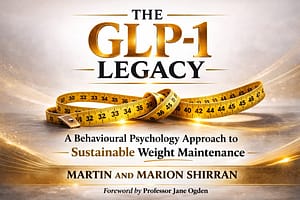
It features a foreword by Professor Jane Ogden of the University of Surrey, a leading expert in health psychology, reinforcing the importance of behaviour in long-term weight management.
Drawing on over 15,000 hours of clinical work and real-world experience, The GLP-1 Legacy provides a practical, psychologically grounded framework to help you maintain your results, rebuild control and navigate the transition off medication with confidence.
The GLP-1 Legacy is not a diet book; it doesn’t list exercise regimes, but it is packed with tools that you can implement immediately, ensuring that the dreaded weight creep is something that happens to others, not you. You can read a sample of the book on our website.
Weight Regain After Wegovy
The book is available on Amazon in Kindle, paperback and hardback formats. If you’re about to stop Wegovy, or already have, this is the phase that decides whether the weight stays off or comes back. You can read the reviews and see exactly what others experienced after stopping.

Because weight loss is one phase. Maintaining weight loss after Wegovy is where the real work begins.
Frequently Asked Questions about Wegovy after Stopping
Over a thousand individuals, including medical professionals, celebrities, and the general public, have travelled from around the world to experience Martin and Marion’s weight-loss treatment. Some sought to enhance their appearance, while others prioritised their health, successfully reversing medical conditions like insulin resistance, diabetes, high blood pressure, and fatty liver disease.
Their programme has undergone over fifteen years of research and development. Clients of various ages, from fourteen to eighty-six, have achieved remarkable results.


google-site-verification: googlef6c425f95ce1433a.html