The first tool helped create the weight loss. The next tool helps protect it.
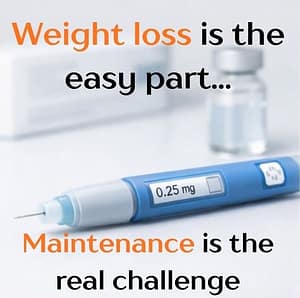
GLP-1 medications such as Ozempic, Wegovy and Mounjaro have changed the weight-loss landscape. For many people, they have done what they were intended to do: help deliver meaningful weight loss. But weight loss is not the same as long-term maintenance, and as treatment is reduced, stopped or reassessed, many users need a different kind of support.

The maintenance phase can bring new challenges. Appetite may return, old routines may reappear, food choices can become harder again, and the daily behaviours that support a lower weight may need more structure. This does not mean the medication has failed. It means the user has moved into a different phase of the treatment pathway.
The GLP-1 Legacy is a book by Martin and Marion Shirran, written as a practical aftercare handbook for people moving from GLP-1 weight loss into long-term maintenance. It is not a diet book, a replacement for clinical care or the whole solution. It is one practical support tool within a wider maintenance approach, and a resource doctors, clinicians and private prescribers can signpost patients towards when they need something structured to use between appointments.

Buy The GLP-1 Legacy on Amazon
Read a Sample Chapter
Who this book is for
The GLP-1 Legacy has been written for people who have used, are using, or are coming to the end of treatment with GLP-1 medications such as Ozempic, Wegovy or Mounjaro. It is especially relevant for those reducing their dose, stopping medication, worried about appetite returning, or trying to maintain weight loss after treatment.
The book is also relevant for people who are still actively using GLP-1 medication but want to prepare properly for the maintenance phase before the pressure returns. The medication may have helped with the weight loss, but the next challenge is to protect it. That is where practical aftercare matters.

Why weight loss is not the end of the treatment pathway
During active GLP-1 treatment, many people experience reduced appetite, fewer food thoughts, and greater control over eating. This can make weight loss feel more achievable than it has for years. But the maintenance phase is different, and it should not be treated as a weaker version of the weight-loss phase.
When medication is reduced or stopped, appetite may return. Portions may creep up. Food choices can become harder again. Emotional eating, social eating, alcohol, stress and tiredness may all start to matter more. GLP-1 medication is not expected to provide the complete long-term maintenance framework once treatment changes. That role has to fall to something else: clinical review, nutritional guidance, behavioural support, ongoing monitoring, practical self-management tools, or a combination of these. The GLP-1 Legacy was written for this second phase.
A user manual for your new, slimmer self
Many people focus so much on losing weight that they are not fully prepared for living at a lower weight. That can be a difficult transition because a slimmer body does not automatically create new habits, new routines, new responses to stress or new ways of managing food cues. Those skills often need to be learned, practised and reinforced.
The GLP-1 Legacy helps users think through the practical realities of maintenance, including appetite return, behavioural drift, social eating, emotional triggers, early signs of regain and the routines that support long-term results. In simple terms, it is a user manual for your new, slimmer self.
A practical signposting resource for clinicians
For doctors, clinicians and private prescribers, the aftercare problem is also practical. Patients may need help understanding the maintenance phase, but appointment time is limited. A short consultation may cover medication, progress, side effects and next steps, but it may not allow enough time to work through every behavioural and psychological issue linked to long-term weight maintenance.
That is where a patient-facing resource can help. The GLP-1 Legacy gives clinicians something concrete to signpost towards. It does not replace clinical judgement, medication decisions, dietetic support or follow-up care. It supports the conversation by giving patients a structured handbook they can read, revisit and apply between appointments.
If a patient is coming to the end of GLP-1 treatment, reducing medication or asking how to maintain weight loss after stopping, this book gives them a practical framework for the next phase.

Why The GLP-1 Legacy was written
The GLP-1 Legacy was not written from theory alone. Martin and Marion Shirran have spent years working in behavioural weight management, with more than 15,000 hours of one-to-one clinical experience. The book also draws on interviews and observations from GLP-1 users describing what happens when appetite, food cues and old routines begin to reappear.
The foreword is written by Professor Jane Ogden, Professor of Health Psychology at the University of Surrey, whose work has helped shape the understanding of eating behaviour, weight management and health psychology. The book also draws on the authors’ wider behavioural work, including Tactile Cognitive Behaviour Therapy, a practical development of CBT principles using a physical pause-button technique to interrupt automatic behaviour and create space for a different decision.

That work has previously attracted endorsement from Professor Windy Dryden, a leading figure in CBT, and Professor Philip Zimbardo, the Stanford psychologist known for his work on time perspective. These details matter because post-GLP-1 maintenance is not only a medication issue. It is also a behaviour issue, a psychology issue and a long-term maintenance issue.
What makes this different from general lifestyle advice?
Many people are told to “eat well”, “keep active”, or “try not to regain the weight”. That may be well meant, but it is not a complete aftercare framework. The maintenance phase needs clearer guidance than that.
The GLP-1 Legacy helps users understand the shift from medication-supported weight loss to long-term maintenance. It focuses on what happens after the visible success: the routines, decisions, triggers and patterns that shape whether weight loss is protected over time.
The aim is not to frighten people about stopping medication. The aim is to prepare them. Aftercare should not begin only once weight regain has already started. The best time to introduce maintenance thinking is before the problem becomes visible.
One tool within a wider maintenance approach
No serious discussion of post-GLP-1 maintenance should pretend that one book, programme or intervention can solve the whole problem. Long-term maintenance may involve medication decisions, clinical follow-up, dietetic input, behavioural strategies, psychological support and personal accountability.
The GLP-1 Legacy sits within that wider picture as one practical aftercare tool. Its role is to make the maintenance phase clearer, more structured and less dependent on vague lifestyle advice. The first tool helped create the weight loss. The next tool helps protect it.
If you are a GLP-1 user
If you are coming to the end of GLP-1 treatment, reducing medication, stopping treatment or trying to maintain weight loss after Ozempic, Wegovy or Mounjaro, The GLP-1 Legacy was written for this phase. It gives you a practical framework for understanding what may happen next and how to protect the result you have achieved.
Buy The GLP-1 Legacy on Amazon
If you are a clinician or prescriber
If you work with patients using GLP-1 medication, The GLP-1 Legacy can be signposted as a practical aftercare handbook for those moving from weight loss into maintenance. It is not a substitute for clinical care, but it can help reinforce the maintenance conversation and give patients something structured to use between appointments.
Signpost patients to The GLP-1 Legacy
Read a Sample Chapter
The next phase after GLP-1 weight loss
The first GLP-1 story was weight loss. The next one is maintenance. As more people reduce, stop or reassess GLP-1 treatment, the question becomes clearer: what practical support helps people maintain the weight loss they have achieved?
The GLP-1 Legacy was written to answer that question as one practical aftercare handbook within a wider long-term maintenance approach. The medication helped with weight loss. Now the next tool helps protect it.
Buy The GLP-1 Legacy on Amazon
Read a Sample Chapter

FAQs
If you’re looking to understand what happens after stopping GLP-1s, we have numerous blog posts covering the questions most people are asking right now, from how quickly appetite returns and what drives weight regain, to practical ways of maintaining control without medication.
Start with our detailed breakdown of what happens after stopping GLP-1 medications, explore how much weight regain to expect, and learn how quickly appetite returns after Ozempic. You can read our post about what happens after coming off GLP-1s. You can also read about how long GLP-1 medications stay in your system, practical strategies for maintaining weight loss after Wegovy, and our guide to microdosing and tapering GLP-1 injections for a more gradual transition.