
Weight Regain After Mounjaro: What Happens Next?
After stopping Mounjaro, most people experience a return of appetite, increased thoughts about food and a shift in how manageable eating feels. For many, this happens sooner than expected. Over the past twelve months, we’ve worked closely with individuals going through this transition, and the patterns are consistent, but rarely explained clearly.
Most people start Mounjaro focused on losing weight, but very few are prepared for what happens next. Weight loss and weight maintenance require different skills. In the early phase, motivation is reinforced by the numbers on the scales. Progress is visible, measurable and often consistent, which makes it easier to stay engaged.
Weight Regain After Mounjaro
While on the medication, appetite is supported externally and food noise is reduced. Eating feels more manageable, and social situations often require less effort. But as you come off Mounjaro, those effects begin to reverse. Hunger increases, thoughts about food return and maintaining control can feel more difficult than expected. This isn’t failure. It’s the natural shift that happens when that level of support is removed.
What’s often missing is a clear plan for handling this transition. So, while the medication can be highly effective for weight loss, the real challenge actually begins when the treatment stops. That’s where many people struggle. The GLP-1 Legacy, The GLP-1 Legacy book was written specifically to address this phase, explaining what to expect and outlining practical ways to protect the progress you’ve made.

As anyone who has been on a course of Mounjaro knows, it helps reduce appetite, quieten food noise and makes eating feel more manageable. But as you transition off Mounjaro, those effects slowly begin to reverse. Hunger increases, thoughts about food return and maintaining control can often feel more difficult than expected. This isn’t failure: it’s the natural shift that happens when the medication support is removed without a clear plan for what comes next.
Support Not Keeping Pace
In clinical guidance, GLP-1 treatments are intended to be supported by behavioural and lifestyle input alongside the medication. In practice, however, that level of structured support is often limited or, in some cases, almost non-existent. Many users are left to navigate the transition off the medication with very little assistance and have to resort to searching on the Internet for information. This is evident in the fact that globally tens of thousands of searches on the topic are logged every day. That was one of the key reasons behind the research and writing of our book, The GLP-1 Legacy. Read a sample of the book on our website.
Evidence suggests that people who combine GLP-1 treatment with structured behavioural changes are more likely to maintain weight loss than those who rely on medication alone. Using this window effectively can make a significant difference once Mounjaro is stopped. This is also sound advice if you’ve been on any GLP-1 medication.
Why Does Weight Regain Happen After Mounjaro?
Weight regain after Mounjaro is common for a simple reason. The medication changes appetite, but it doesn’t automatically change long-term behaviour. After stopping, the drug remains active in the body for a period of time, meaning appetite may still feel controlled, and eating patterns can appear stable. This can create a false sense of security, where it seems as though new habits have taken hold.

What Happens When You’re Coming off Mounjaro?
However, coming off Mounjaro is a transition phase that many people underestimate. As the medication gradually clears from the system, several changes occur: appetite increases; food thoughts become more frequent (“food noise”); fullness after meals reduces; snacking urges return and old triggers can re-emerge, often catching people off guard. Understanding these changes in advance helps you respond to them calmly, rather than feeling completely blindsided.
The Part Most People Aren’t Told
Used well, Mounjaro can be a powerful tool. It creates a window of opportunity where reduced hunger and quieter food thoughts allow you to reset routines, improve food choices and build more stable patterns of behaviour. We also cover Wegovy’s effects on hunger in another post.
While you’re on a course of Mounjaro, the effort required to make better decisions is lower. This makes it an ideal time to establish consistent habits around eating, such as regular meal structure, portion awareness and recognising the difference between physical hunger and emotional or situational triggers.
Using Mounjaro as a Tool, Not a Long-Term Solution
The time spent on the medication also creates space to address some of the cognitive patterns that often drive overeating. These include all-or-nothing thinking, using food as a reward or relief, and automatic responses to stress, boredom, or environment. With appetite reduced, these patterns become easier to notice, challenge and change. Importantly, this is also where self-regulation skills begin to develop. Learning to pause before reacting, to tolerate mild hunger and make intentional choices rather than automatic ones becomes critical once the medication is no longer in your system.

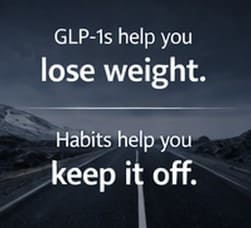
Over time, repeated behaviours begin to form more automatic habits. The aim is not perfection, but consistency. Small, repeatable actions carried out during this phase can become the foundation for long-term weight maintenance. The key message is simple: Mounjaro can help you lose weight, but what you do while you’re on it determines what happens next. The same goes for those taking Ozempic or Wegovy.
Weight Maintenance
Weight loss and weight maintenance are different phases. While on medication, control is supported externally, but after stopping Mounjaro, it becomes internally driven again. You’ve put in the time, often 12 months or more, and also, for many people, made a significant financial investment. You’ve seen the results, heard the compliments, and experienced what it feels like to be back in control. No one wants to lose that. That’s why this next phase matters. It’s not about going backwards; it’s about holding on to what you’ve already achieved.
Early Signs of Weight Regain after Mounjaro
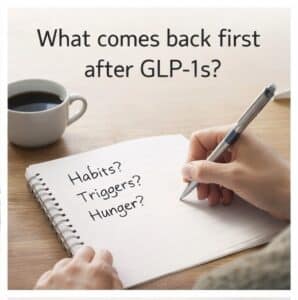
Weight regain after coming off Mounjaro usually starts gradually. Early signs include portion sizes increasing without noticing, snacking becoming more frequent, eating linked more to mood than hunger and less structure around meals. These signs are easy to overlook, but they signal that old habits are starting to return.
Why Willpower isn’t Enough
When weight starts to creep back, the instinct is often to try harder, to rely on willpower, be stricter and “get back on track”. On the surface, that feels logical. In reality, however, willpower is unreliable, especially when hunger signals are stronger, food is more rewarding again and the mental effort required to resist becomes more intense. In that state, relying on willpower alone is like trying to hold back the tide. It works briefly, then breaks.
What works better is structure. Simple, repeatable behaviours reduce the need to rely on motivation in the moment. When eating patterns are planned, meals are consistent, and decisions are made in advance, there’s less room for impulsive or reactive choices.

Changing the Thinking Patterns Behind Weight Regain
It also helps to understand that much of eating behaviour is automatic. It’s driven by cues, time of day, environment and emotional state rather than conscious decision-making. When those cues reappear after stopping medication, old patterns can return quickly unless something has been put in place to interrupt them.
One practical tool is to introduce a pause before eating. When you feel the urge, wait five to ten minutes and ask: Am I physically hungry, or is this a habit, emotion or situation? This small shift creates a gap between impulse and action. It allows the thinking part of the brain to re-engage, rather than reacting automatically.
Over time, that pause becomes a skill. Not perfect, not always applied, but enough to reduce the number of automatic decisions that lead to overeating. Long-term weight maintenance isn’t built on willpower; it’s built on systems that work even when willpower runs low.
The Role of Habits after Mounjaro
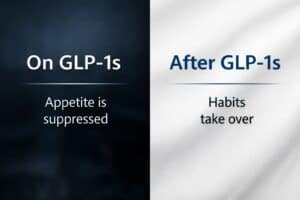
Mounjaro changes appetite, but it doesn’t remove learned behaviour. As you transition off the medication, habits become the main driver again. This is why long-term success depends on what is built alongside treatment, not just during it.
Key areas to focus on:
Developing alternatives to emotional eating
Keeping routines simple and consistent
Keeping meals structured rather than reactive.
Consistency matters more than intensity.
Reducing the Risk of Weight Regain. Maintaining weight loss after Mounjaro doesn’t require extreme measures, but it does require awareness.
What tends to work:
Expect increased hunger and plan for it
Notice small changes early
Focus on behaviour rather than just weight
Accept that some fluctuation is normal
Trying to maintain a perfect lowest weight often leads to frustration; keeping your weight within a stable range is more realistic and sustainable.
A Different Way to Think About Life After Mounjaro
Mounjaro can be a powerful tool for weight loss, but it’s only one part of the process. Life after Mounjaro is where long-term outcomes are decided. This is also where many people feel least supported. Understanding the behavioural side of this transition is key.

This page was written to highlight a problem many people face but are rarely prepared for: weight regain after Mounjaro. The New Book – The GLP-1 Legacy – was written specifically for people coming off GLP-1 treatments, including Mounjaro, Wegovy or Ozempic.
Its purpose is simple: to help you maintain your weight loss and avoid the gradual regain that often follows when appetite returns and old patterns begin to reappear. The book focuses on what happens after the injections stop. It explains how to use a variety of proven, easy-to-use CBT tools and techniques to build better eating habits. The content also includes sound advice about how to create structured ways to manage hunger, rebuild control around food and stay on track long term.

It draws on more than 15,000 hours of clinical and behavioural work, alongside insights from over 100 individuals who have used GLP-1 treatments, reflecting the real challenges people face once medication support is reduced.
The book was written by Martin and Marion Shirran. It also features a foreword by Professor Jane Ogden of the University of Surrey, a leading expert in health psychology, reinforcing the importance of behaviour in long-term success. If you’re thinking about life after Mounjaro, this is the stage that matters most.

FAQs
Martin and Marion Shirran have over 15 years of research and development experience in obesity treatment. Over a thousand individuals have travelled to their clinic in Southern Spain to undertake therapy to aid weight loss. Some sought to enhance their appearance, while others prioritised their health, successfully reversing medical conditions like insulin resistance, diabetes, high blood pressure, and fatty liver disease.



google-site-verification: googlef6c425f95ce1433a.html