
How Much Weight Do You Regain After Stopping Ozempic?
How Much Weight Do You Regain After Stopping Ozempic? It’s one of the most common questions people ask. The honest answer is this: some weight regain is common, but how much varies significantly. Some people regain a small amount. Others regain more. And there is a small group who manage to permanently maintain their weight loss. That difference is not random. It largely comes down to what happens during the transition phase off GLP-1 medication
What the research and real-world experience show
Studies and real-world observations show a consistent pattern. When Ozempic is stopped, appetite gradually returns. As hunger increases and food becomes more rewarding again, it becomes easier for eating habits to shift back towards previous patterns. This is not a failure of the medication. It reflects the removal of the support it was providing.

How Do Some People Maintain Their Weight Loss?
So, how do some people manage to maintain their weight loss after stopping Ozempic, while others regain a significant amount? It isn’t luck, and it isn’t simply about motivation.
During the eighteen months of researching GLP-1 usage for our book, The GLP-1 Legacy, which included interviews with over 100 GLP-1 users, a clear pattern emerged. In virtually every case, those who maintained their weight had two things in place: A structured tapering approach and a clear off-boarding plan.
They did not treat stopping the medication as a single event. They treated it as a phase. Doses were reduced gradually or spaced out, giving them time to adjust as appetite began to return. At the same time, they put simple behavioural structures in place around eating, routines, and decision-making. There is a full, detailed page focused on Tapering here.
The successful group expected change, and they prepared for it. Those who struggled were often caught off guard. They stopped more abruptly, appetite returned more sharply, and without a plan, small changes crept in. Over time, those small shifts compounded into evere increasing weight regain.
That is the difference. Maintaining weight after GLP-1s is not about trying harder. It is about having a plan for what happens next. This is the exact problem addressed in our book The GLP-1 Legacy, which focuses on what happens after the medication stops and how to put a clear off-boarding plan in place, that works to protect the weight loss you have achieved. Its being used successfully by both GLP-1 users and clinicians.
Why does weight regain happen
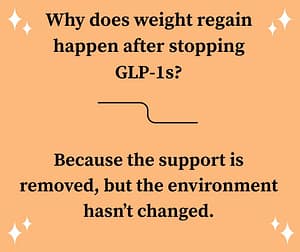
Ozempic helps regulate appetite while you are taking it. When you stop, that support is removed. Hunger increases, food becomes more appealing again, and decisions around eating require more effort.
At the same time, the habits built during treatment are not always strong enough to carry that change on their own. This creates a gap between losing weight and maintaining it, and it’s within that gap that ‘weight creep’ often begins.

Appetite return drives weight regain
Weight regain rarely happens all at once. It usually begins with the return of appetite. Hunger increases, thoughts about food become more frequent, and small changes in eating begin to appear. Over time, these small changes can accumulate. This is why understanding and managing appetite early is critical.

Does everyone regain weight after stopping Ozempic?
No, weight regain after stopping Ozempic is common, but it is not inevitable. The outcome depends on how the transition phase is handled. The earlier appetite changes are recognised and managed, the better the chances of maintaining control.
What happens if nothing changes
If appetite returns and no adjustments are made, it becomes easier to drift back into old patterns. This usually doesn’t happen suddenly. It happens gradually, through small shifts in behaviour that build over time. That’s why this phase is so important.
What this means for you
If you are coming off Ozempic, the key question is not just how much weight you might regain. It’s how you respond when appetite starts to return. After more than 15,000 hours of one-to-one behavioural work and interviews with people coming off GLP-1 medications, one thing stands out clearly: People don’t lose control overnight; they lose it gradually, especially if they don’t have a clear plan for this phase.
Why The GLP-1 Legacy Was Written
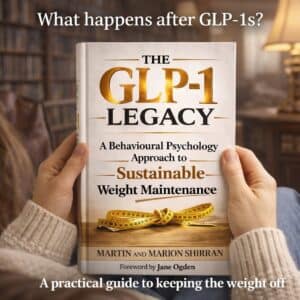
The GLP-1 Legacy was written to address the void that exists around the often non-existent aftercare required to help users transition off GLP-1s. It draws on over 15,000 hours of behavioural work with clients, combined with real experiences from GLP-1 users, to explain what happens after the injections stop and how to respond to it. It covers managing returning appetite, handling triggers, rebuilding structure and creating a realistic plan for long-term weight stability. The book includes an introduction by Professor Jane Ogden, health psychologist at the University of Surrey.
If you’re not sure whether getting your hands on a copy of the book is the right move, then why not visit the book’s page on Amazon and read the many global reviews from both GLP-1 users and clinicians? That will give you a clear sense of how it’s being used in practice and the difference it’s making for people around the world who are navigating life after the medication.
The GLP-1 Legacy book includes a complete section on both tapering and microdosing. It introduces research data on both approaches and provides in-depth guidelines to users on how to implement the different approaches safely.

FAQs
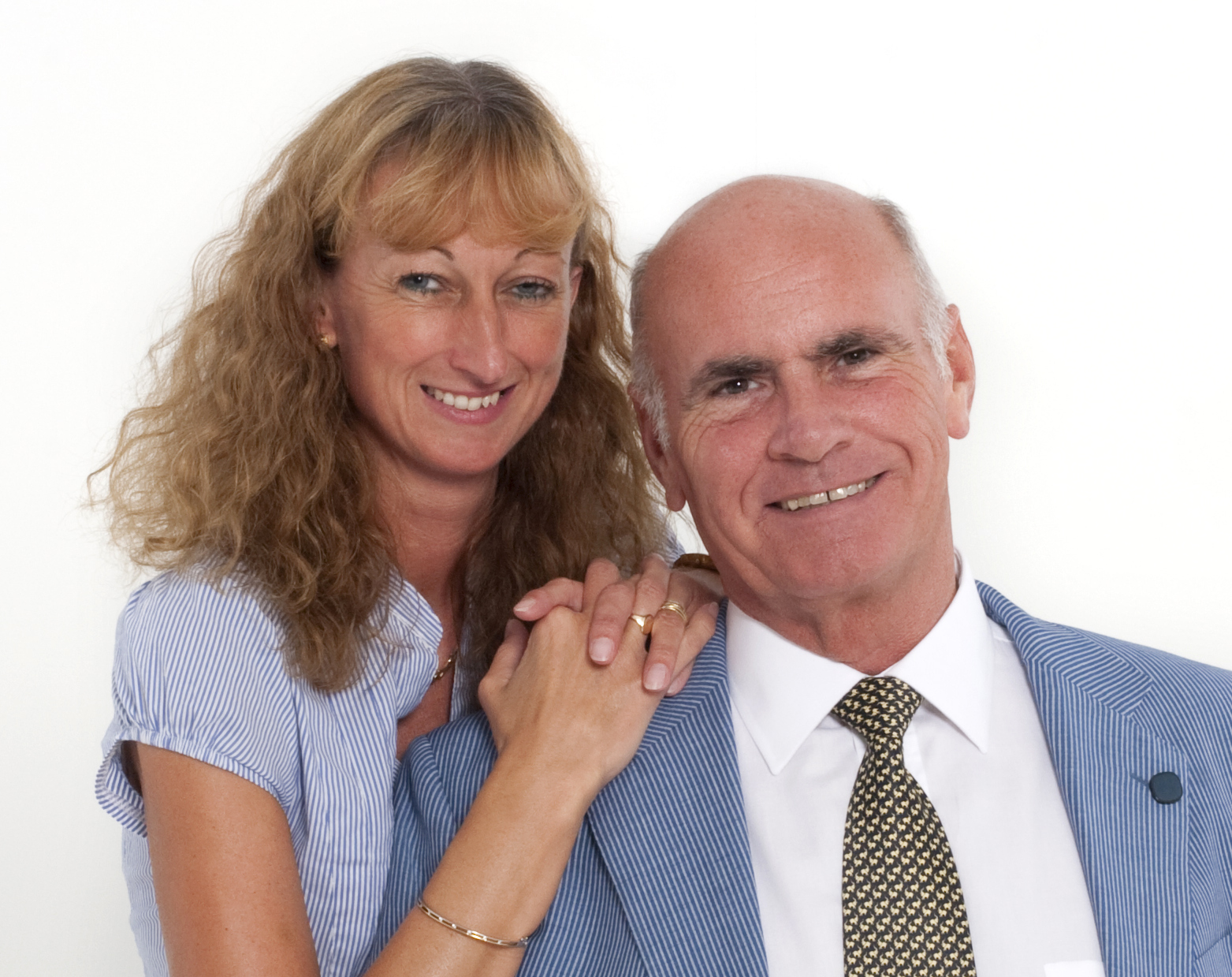
Martin and Marion’s groundbreaking work has been featured in prominent newspapers such as The Daily Mail, The Times, The Telegraph, and The Express. Leading magazines like Vogue, Marie Claire, Good Housekeeping, and Reader’s Digest have also recognised their contributions. The Shirrans and several of their clients have also made television appearances on both sides of the Atlantic.
Over a thousand individuals, including medical professionals, celebrities, and the general public, have travelled from around the world to experience their weight-loss treatment. Some sought to enhance their appearance, while others prioritised their health, successfully reversing medical conditions like insulin resistance, diabetes, high blood pressure, and fatty liver disease.
Martin and Marion Shirran
Marion Shirran, as a director of Oxford Therapeutics, is proud to be a registered Stakeholder in NICE – the National Institute for Health and Care Excellence. Additionally, she is involved in the government’s All-Party Parliamentary Group on Obesity.
They were awarded the ‘Most Innovative Obesity Psychological Therapy Service’ in the UK Mental Health Awards 2022. They are also co-authors of two bestselling books on the topic of non-surgical weight loss, published by Hay House.

