What Is TCBT? Behavioural Therapy for Weight Management
Tactile Cognitive Behaviour Therapy (TCBT) is an applied behavioural framework developed by Martin and Marion Shirran through their work in behavioural weight management, health psychology and long-term behaviour change.
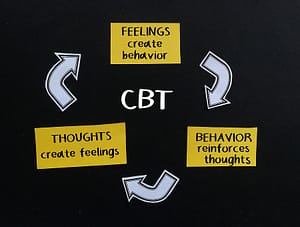
Developed from Cognitive Behavioural Therapy (CBT) principles, TCBT was designed to place greater emphasis on practical engagement, emotional awareness and real-world application. The framework focuses on helping individuals become more consciously aware of automatic routines, impulsive behaviours and emotional triggers that can influence eating patterns, weight regain and decision-making around food.

TCBT emerged through years of direct clinical work with individuals struggling not only with weight loss itself, but also with maintaining change once motivation, structure or external accountability began to reduce.
Why Behaviour Change Often Fails
Many people can lose weight temporarily, but far fewer successfully maintain that change over time. Research increasingly highlights the difference between achieving initial weight loss and sustaining healthier routines once the early momentum begins to fade.
This challenge has become increasingly relevant with the growth of GLP-1 medications such as Ozempic, Wegovy and Mounjaro. While these medications can significantly reduce appetite during active treatment, many individuals report the gradual return of hunger, increased “food noise” and previous eating patterns once treatment pathways end.
Martin and Marion Shirran developed TCBT around the principle that lasting change requires more than short-term motivation. It requires increased self-awareness, recognition of trigger patterns and practical techniques capable of working within real-world environments long after initial weight loss has occurred.
The Core Principle Behind TCBT
Traditional Cognitive Behavioural Therapy approaches are often discussion-based and reflective in nature. TCBT was developed to introduce a more immediate practical component through physical engagement and conscious pause techniques designed to increase awareness before automatic reactions occur.
A central principle within TCBT is the creation of a deliberate pause between impulse and action. Rather than reacting automatically to cravings, emotional triggers or habitual routines, the framework encourages individuals to briefly stop, reflect on consequences and regain conscious control before making decisions linked to eating or impulsive behaviours.

Within some applications of TCBT, physical tactile tools such as the “Pause Button” device are used as interruption cues. The aim is not to eliminate cravings or suppress thoughts, but to encourage conscious reflection and create a short psychological space between trigger and response.
The framework places strong emphasis on emotional regulation, trigger recognition, conscious decision-making and sustainable long-term habits.
TCBT and Weight Management
Much of Martin and Marion Shirran’s work has focused on the psychological challenges associated with emotional eating, habitual eating patterns, behavioural relapse and weight regain.

Through years of clinical work, they observed that many individuals understood nutritional advice intellectually, yet continued struggling with deeply established routines and emotional reinforcement patterns.
TCBT was developed to help bridge this gap between knowledge and action. The framework focuses on increasing awareness around eating behaviour, recognising trigger patterns and improving consistency in everyday situations.
Rather than approaching weight management as a short-term dieting process, TCBT places greater emphasis on sustainable lifestyle change and practical real-world application.

TCBT and the Post-GLP-1 Transition
As GLP-1 medications have become more widely used, increasing attention has begun focusing on what happens after treatment pathways end. Many users report the gradual return of appetite, increased food focus, emotional eating triggers re-emerging and anxiety around weight regain once medication support is removed.
This growing “aftercare gap” has become an increasing focus of Martin and Marion Shirran’s recent work.
TCBT principles are particularly relevant to the post-GLP-1 transition because the framework focuses on appetite awareness, routine disruption and practical engagement strategies once external appetite suppression begins to reduce. Their work now focuses increasingly on helping individuals understand the psychological transition that can occur after active treatment ends.

Professional Recognition
Martin and Marion Shirran are internationally published authors whose previous books were published globally by Hay House in New York.
Their work around TCBT received endorsement from Professor Windy Dryden of Goldsmiths, University of London, while Professor Philip Zimbardo of Stanford University wrote the foreword to their second book.
TCBT, together with its applied behavioural concept “Pause Button Therapy”, has also featured in publications including Psychologies magazine.

Martin and Marion Shirran were invited to present aspects of their behavioural work at the Second International Conference on Time Perspective at the University of Warsaw, an academic event associated with Professor Philip Zimbardo of Stanford University.
Their behavioural work has additionally featured internationally, including appearances on Good Morning America in New York and This Morning in the UK, alongside coverage in publications including The Times, The Daily Telegraph, Daily Mail, Marie Claire, Vogue and Hello!.

Frequently Asked Questions
FAQs